


Weldtrack for welding.
Keeps the procedures, welders, materials and welds of every job together.

What it does.
For fabricators who weld: structures, pressure equipment, piping, rail, shipbuilding.
- WPS and PQR, with qualified ranges calculated from the code.
- Welder qualifications, expiry dates and continuity.
- Weld map and a record of every joint.
- Material certificates and heat traceability.
- Consumables, ovens and welding costs.
- A field app for the shop floor.
How it works.
-
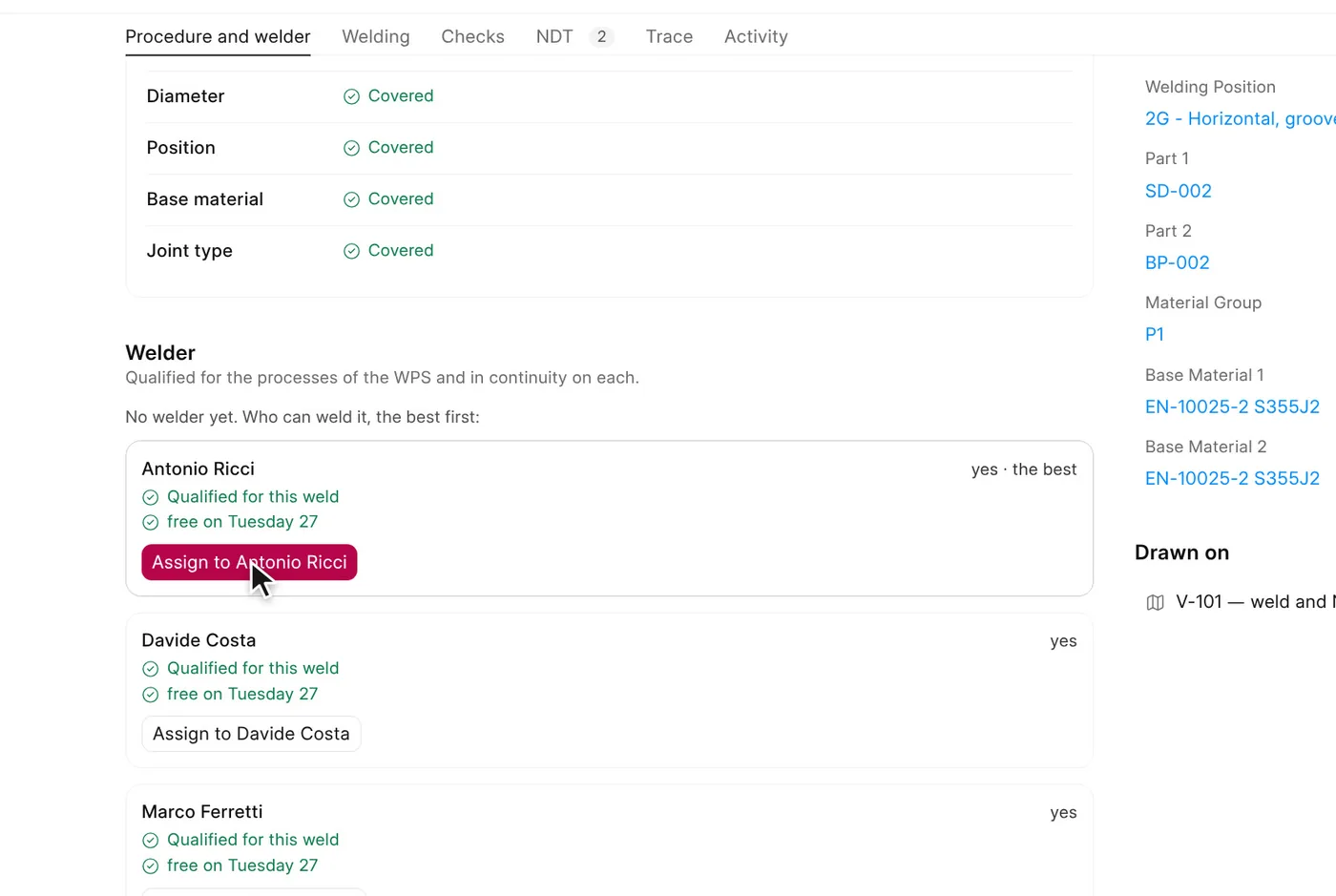
Set up procedures and welders
Welding procedures (WPS) and welder qualifications live in one register, with their expiries under control.
-
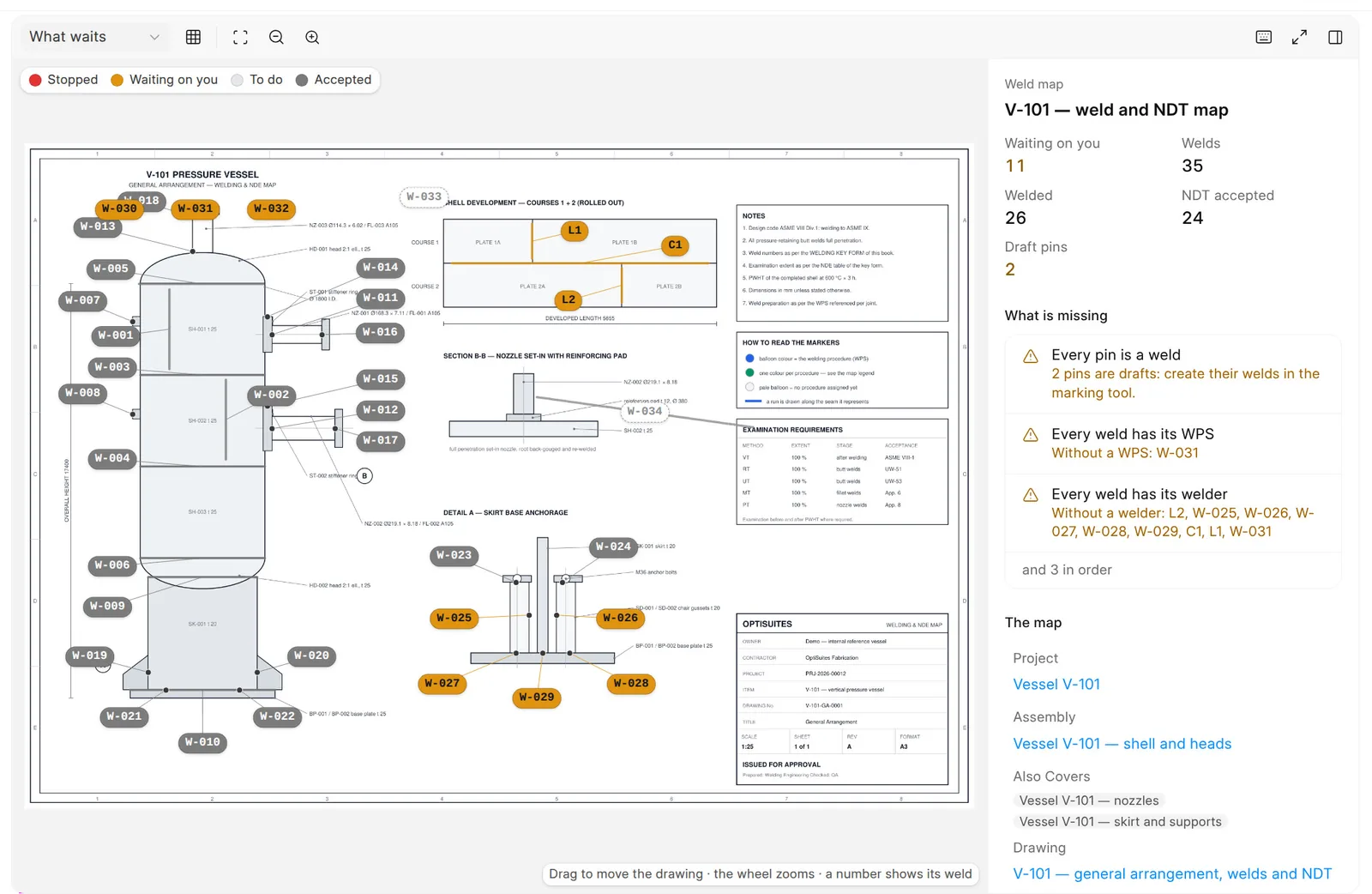
Follow every weld
On the job's weld map you see every joint: which procedure, which welder, which material.
-
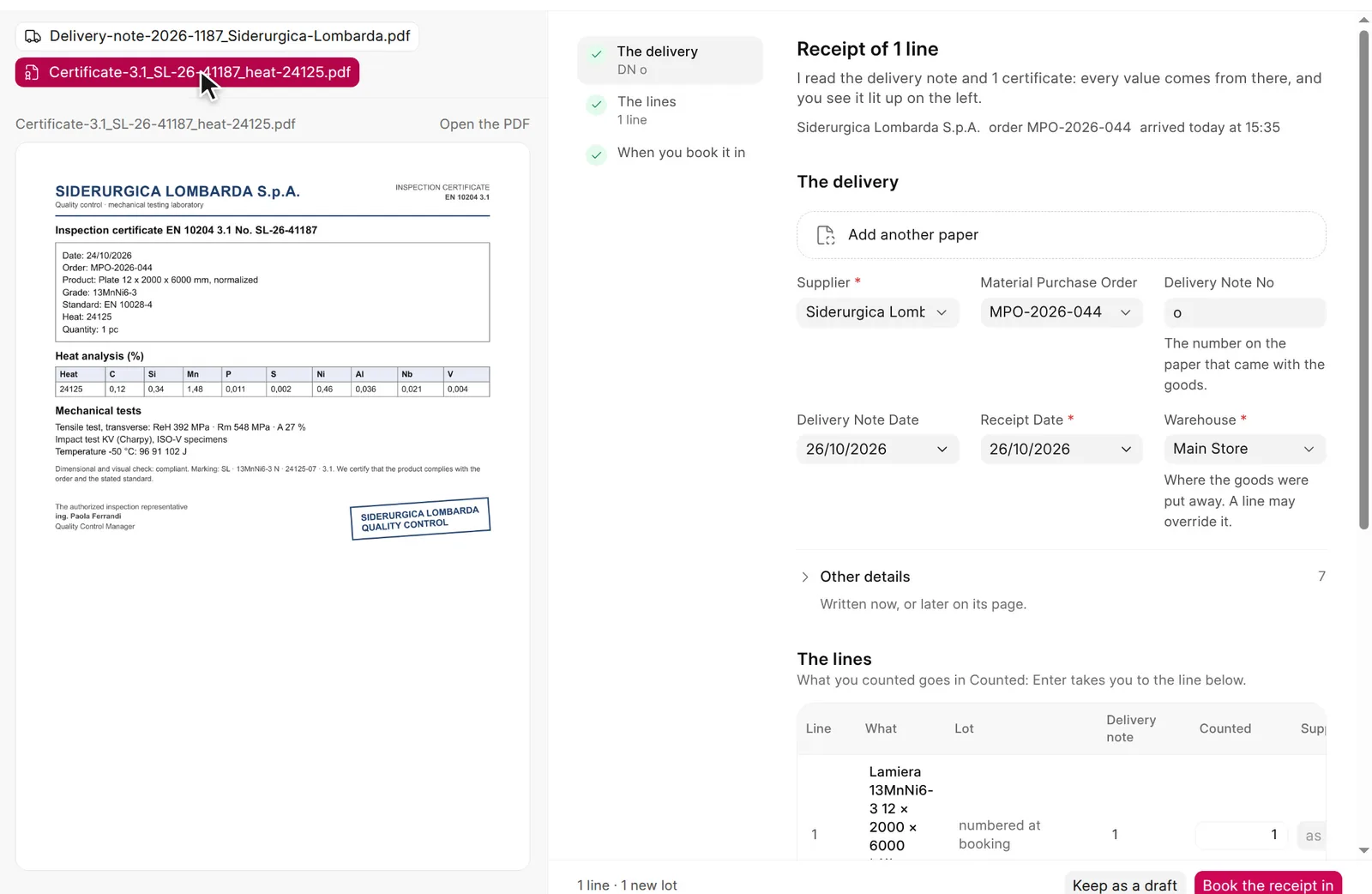
Material stays linked
The material's 3.1 certificate is recorded once. The heat stays tied to the joints it went into.
What changes.
Today
- Procedures and qualifications in separate spreadsheets.
- Only the shop floor knows who welded which joint.
- Material certificates are hunted for in email.
- The dossier is rebuilt at the end of the job.
With Weldtrack
- Procedures and qualifications in one register, with expiries.
- Every joint knows its procedure, welder and material.
- The certificate is recorded once and stays linked.
- The final dossier builds itself as you work.
Inside Weldtrack.
Parts included
Standards it follows
- EN ISO 3834Quality requirements for fusion welding of metallic materials
- EN 1090CE marking of structural steel and aluminium components
- PED 2014/68/EUThe Pressure Equipment Directive
- EN 15085Railway applications — welding of railway vehicles and components
- ASME BPVC Section IXWelding, brazing and fusing qualifications
Underneath there is always the base platform, with the AI assistant and unlimited users. How the platform is built
In detail.
Structural steel on Monday and a pressure vessel on Tuesday is the same shop, not two companies. Welding is one system for the work; the code you have to satisfy is a layer you switch on per job.
Everything a joint needs to be proven is recorded once — the procedure that qualifies it, the welder who made it, the heat it came from — and the handover dossier builds itself from those records.
When you run the examinations yourself, add Non-destructive testing; when a customer asks for a plan with hold points, add Inspection plans. Same record, nothing retyped.
The other modules.
They plug into the same base platform. More than one is fine.
We'll show you on one of your jobs.
A demo on one of your real jobs. We'll write back by tomorrow.
Book a demo